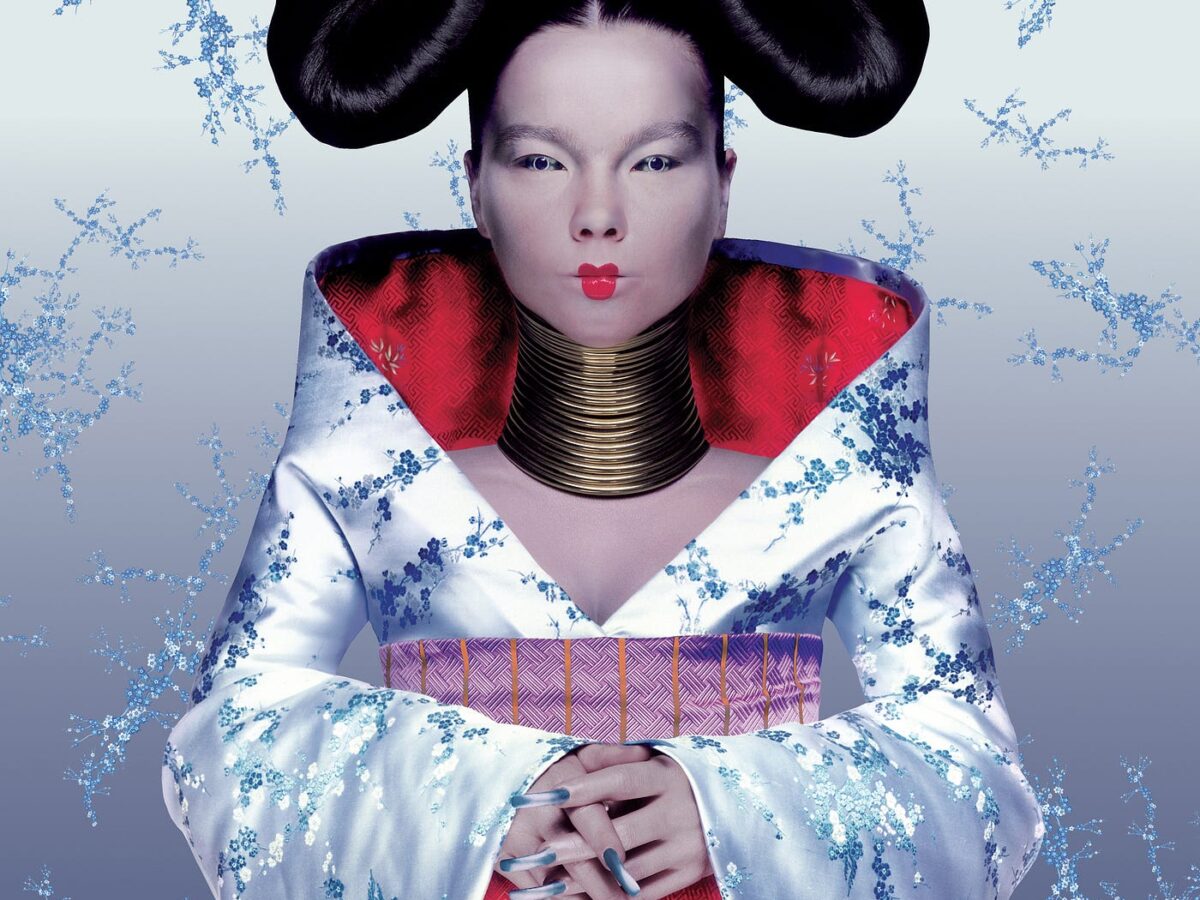
When Björk began shaping Homogenic in 1997, she wasn’t just thinking about sound, she was imagining a complete world. The album would become one of the clearest examples of how her visual identity and music are inseparable, and its cover stands as one of the most iconic images of the 1990s.
The origins of that image can be traced back to a photograph Björk encountered in Visionaries magazine. Shot by Nick Knight and art-directed by Alexander McQueen, it featured model Devon Aoki in a surreal, cold-toned composition that blended cultural references and fashion into something almost mythological. The image resonated deeply with Björk, who was already envisioning Homogenic as an exploration of identity, technology, and emotional intensity. She reached out to Knight and McQueen to collaborate on the album cover, asking them to help translate these ideas into a single, powerful visual.
At the heart of the concept was a character, a “warrior of love”. Björk imagined someone placed in such an extreme, impossible situation that transformation became necessary: not into a fighter armed with weapons, but into a figure who resists through emotional strength.
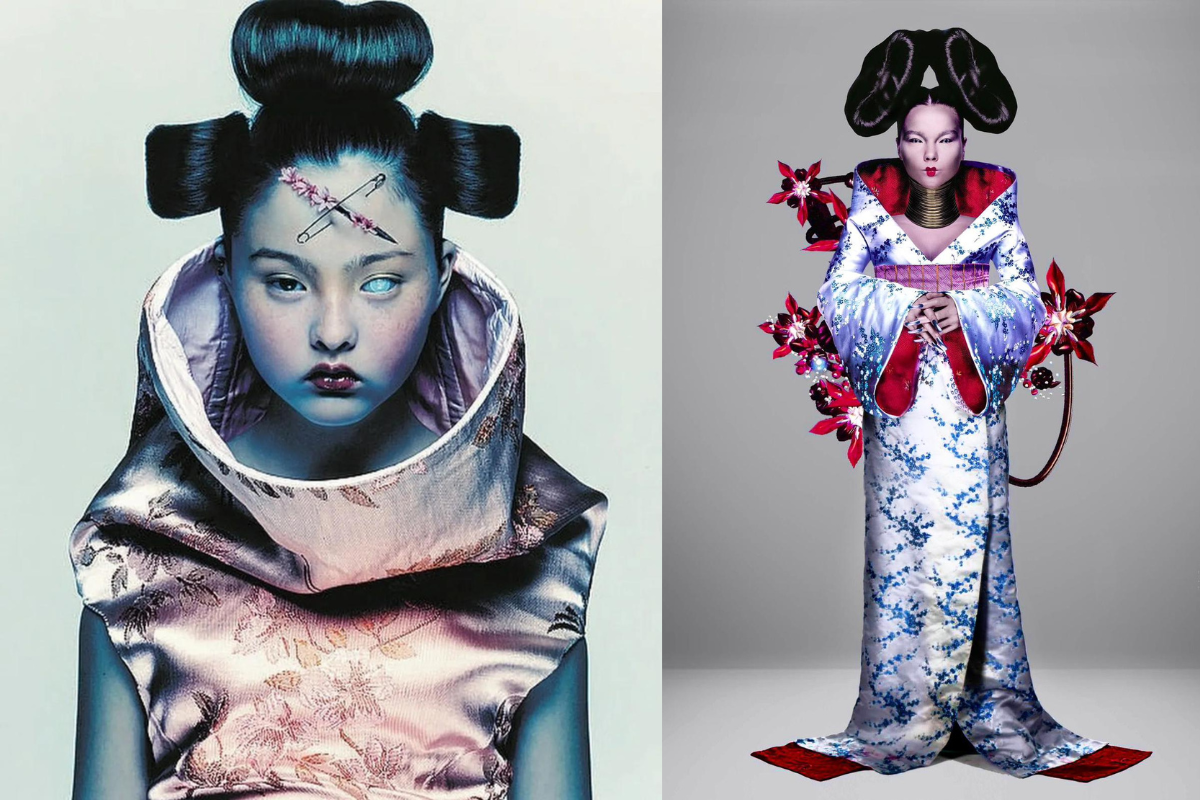
McQueen, working with stylist Katy England, constructed this character through clothing and symbolism. The kimono was handmade in his London studio from blue and white damask satin, woven with prunus blossom and lined in vivid scarlet. It referenced Japanese aesthetics, reflecting McQueen’s long-standing fascination with the culture, but like much of his work, it avoided simple imitation in favour of hybridisation.
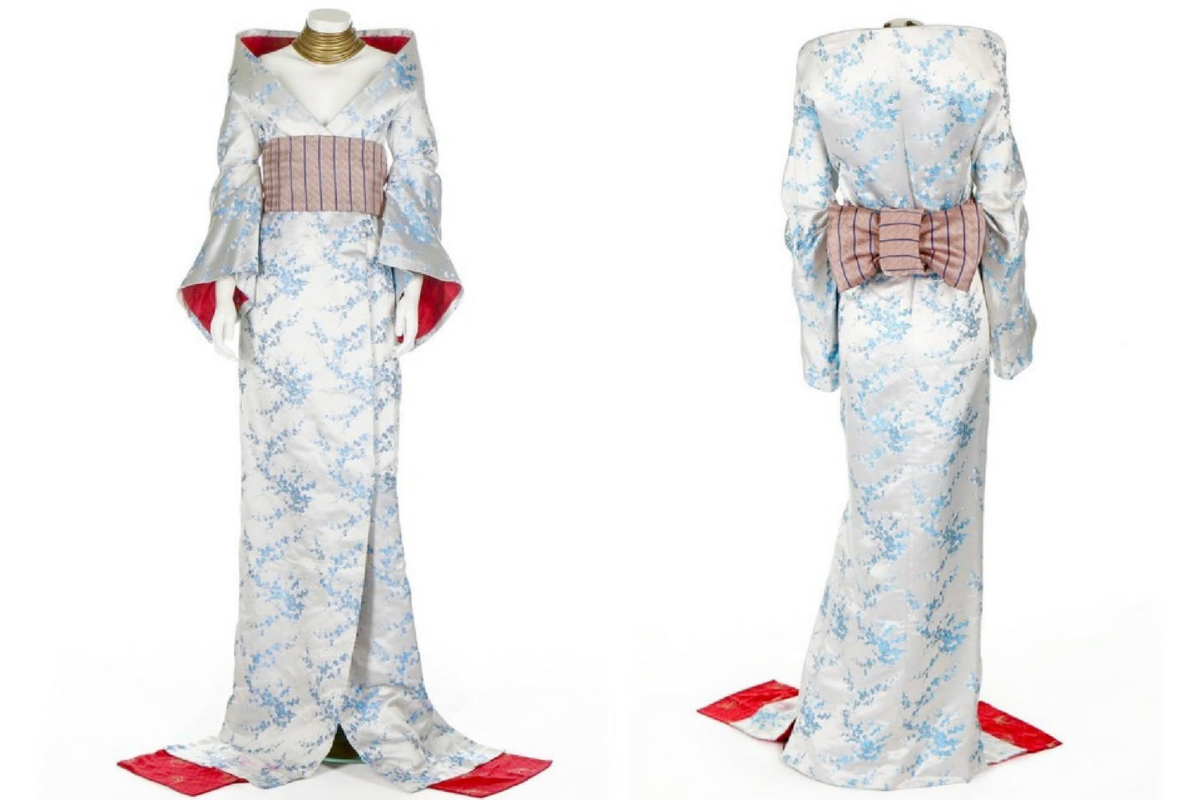
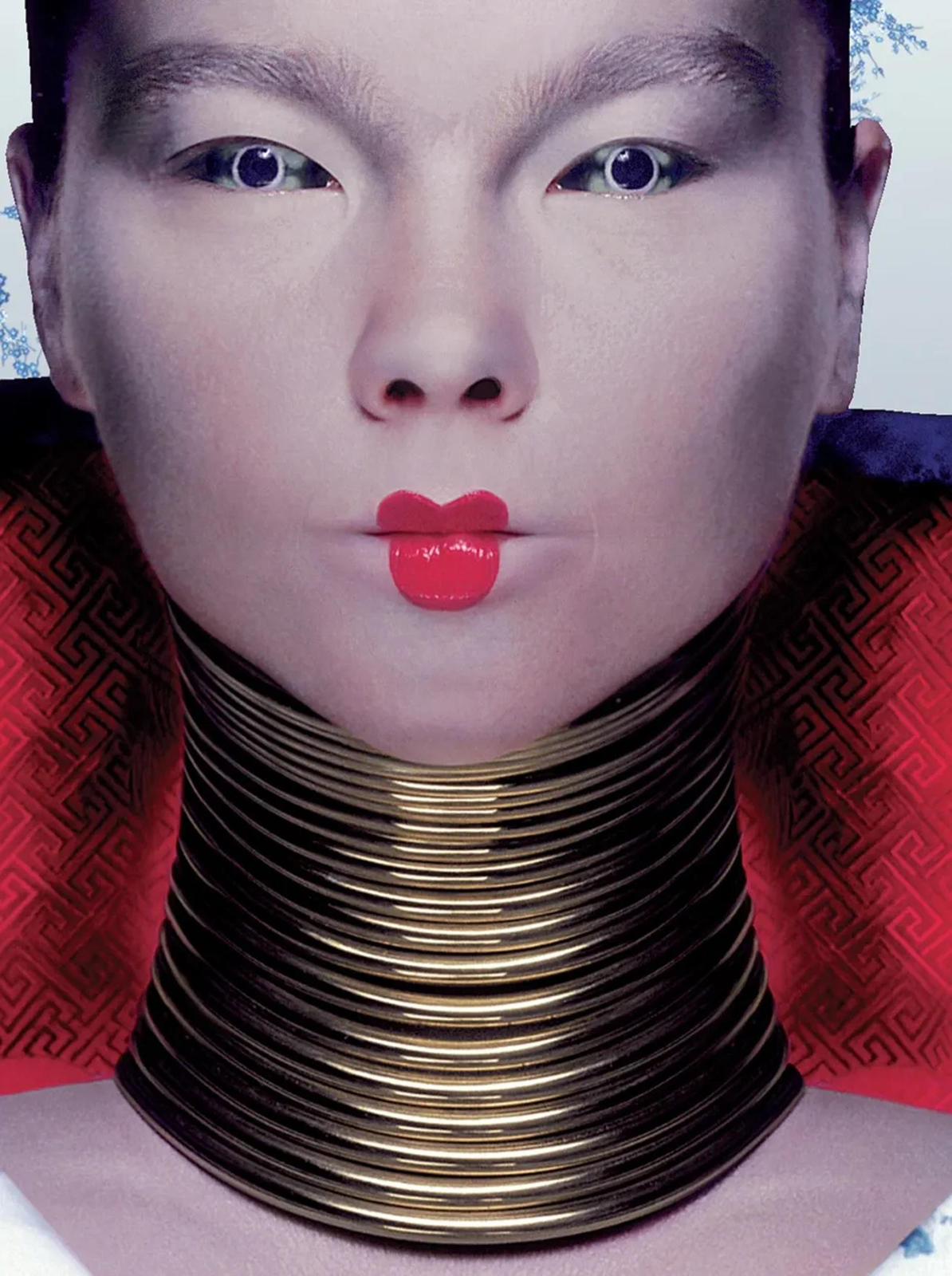
That hybridity extended across the entire look. Björk‘s appearance combined multiple cultural influences: a coiled neckpiece by jeweller Shaun Leane inspired by the brass rings worn by Kayan Lanai women of Myanmar; elaborate hair shaped into sculptural forms reminiscent of Native American traditions; and highly stylised makeup and manicure. Together, these elements formed a kind of “global citizen” figure, something Björk herself identified with. As she described it, she often felt Icelandic abroad and cosmopolitan at home, constantly shifting between identities.
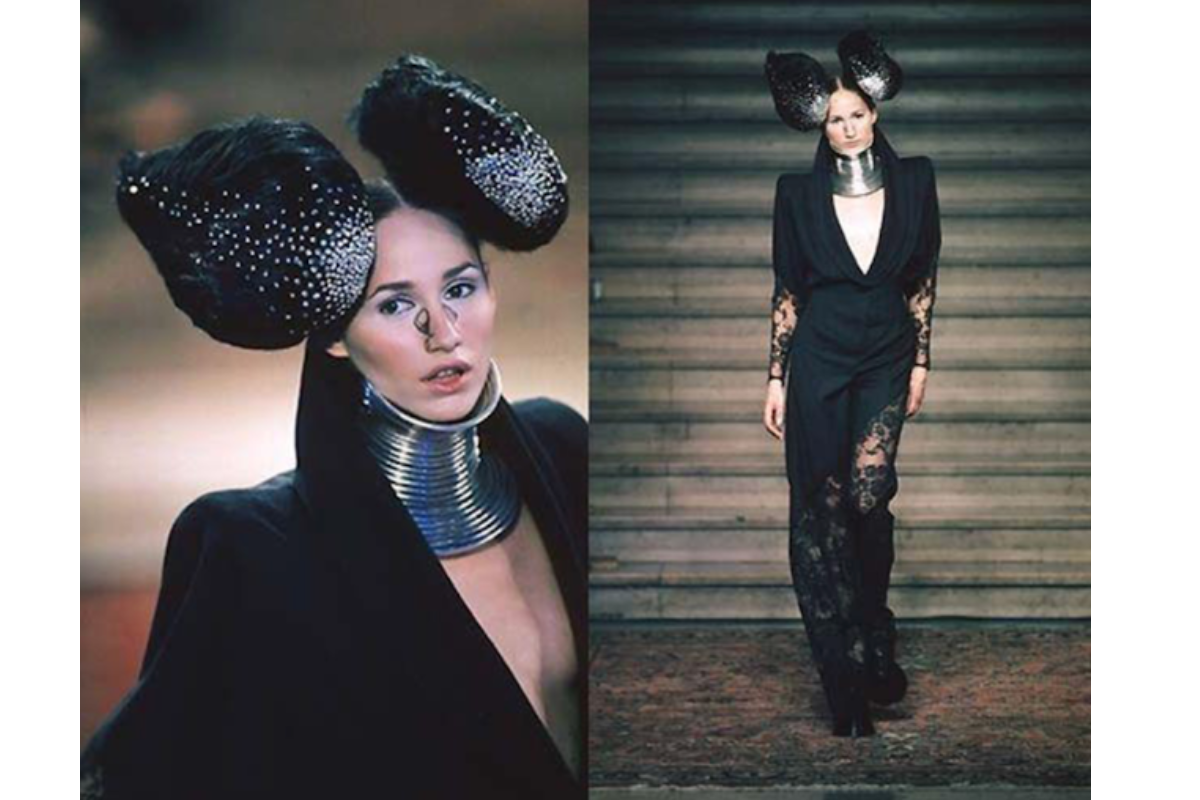
At the same moment as the Homogenic shoot, Alexander McQueen was developing his Elect Dissect haute couture collection for Givenchy (Autumn/Winter 1997-98). Like the album cover, the collection fused a wide range of global influences, drawing from tribal, ethnic, and historical references to construct a deliberately hybrid aesthetic. In the Paris show, the dramatic Masaai-inspired neckpiece created by Shaun Leane, first designed for Björk’s cover, reappeared in a more exaggerated, towering form. Elsewhere, the collection explored a strong vein of Japonisme, with kimono silhouettes, intricate oriental embroidery, and geisha-like hair styling echoing the visual language of the Homogenic image.
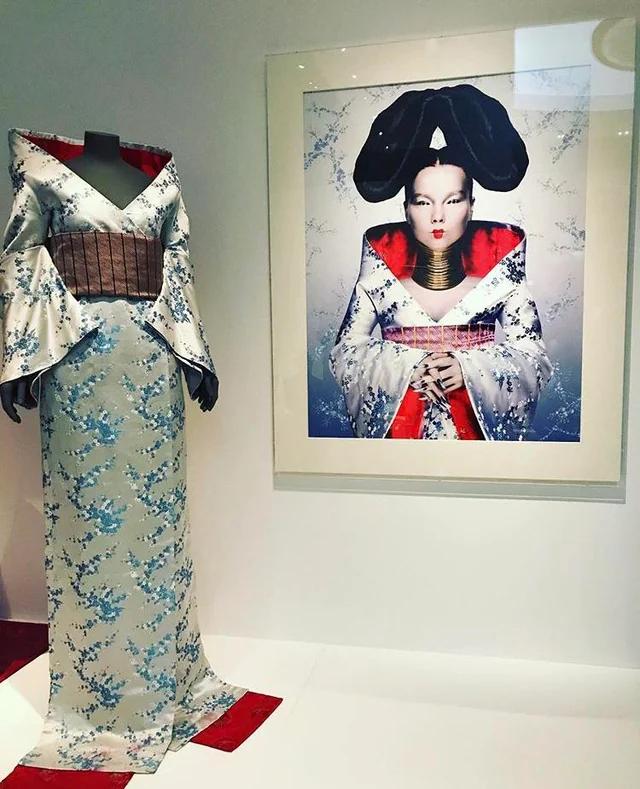
The shoot itself has become almost as legendary as the final image. according to Nick Knight, the cover photograph was the very first shot taken that day. McQueen saw the Polaroid, immediately recognised its strength, and left the studio within minutes, convinced they already had what they needed. Björk and Knight, however, continued shooting for several hours, producing hundreds of images – none of which matched the clarity of that first frame. No outtakes from the session have ever been released, reinforcing the almost mythic status of that singular image.
For Björk, embodying the character was physically demanding. She wore heavy sculptural hair, special contact lenses, restrictive clothing taped into place, and towering clogs that made movement difficult. The constraint was intentional, because the image needed to communicate a sense of pressure and containment, mirroring both the emotional tone of the album and her own experiences at the time.
Björk described the album as a return “home”, a deeper connection to Icelandic identity filtered through electronic experimentation. She immersed herself in London’s underground music scene while also drawing on traditional Icelandic vocal techniques, blending the organic with the synthetic. Thematically, the album explores the friction between nature and technology, intimacy and distance, fragility and resilience.
All of these ideas converge in the cover image, which is a visual manifesto, a figure suspended between cultures.
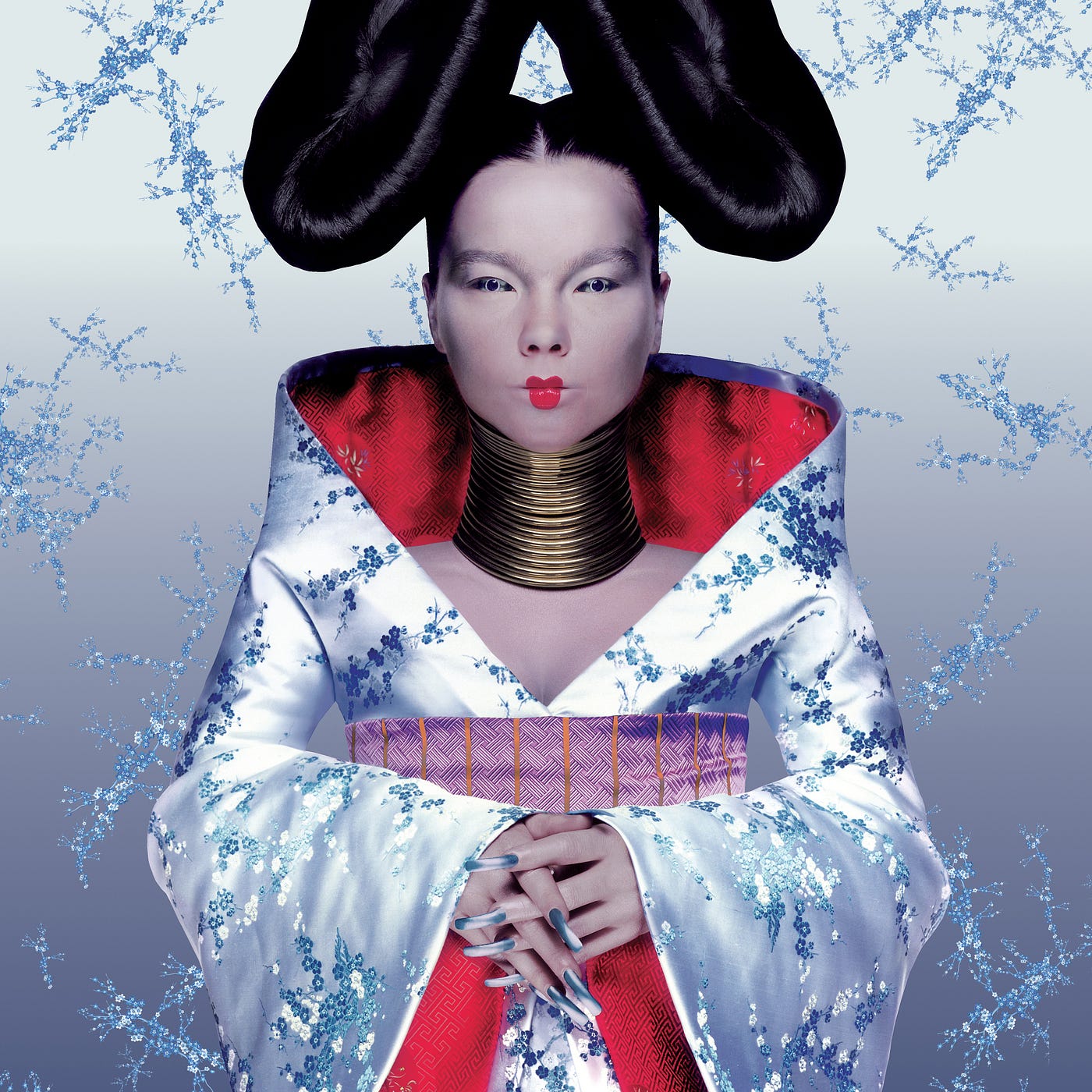
The legacy of the image extends beyond the album itself. The kimono worn by Björk was later sold at auction in 2016, while the cover continues to be cited as one of the most influential collaborations between fashion, photography, and music. More importantly, it crystallised Björk’s approach to artistry: not separating sound, image and identity, but weaving them into a single, unified expression.

- Fine announces Jazz Dreams with new single “Everything in the shade” - September 2, 2026
- Teilz unleashes “tiger” to tease her debut album Come to Mommy - August 29, 2026
- cutty keep things nocturnal and off kilter on “Shadows In the Street” - August 28, 2026